28 February 2023

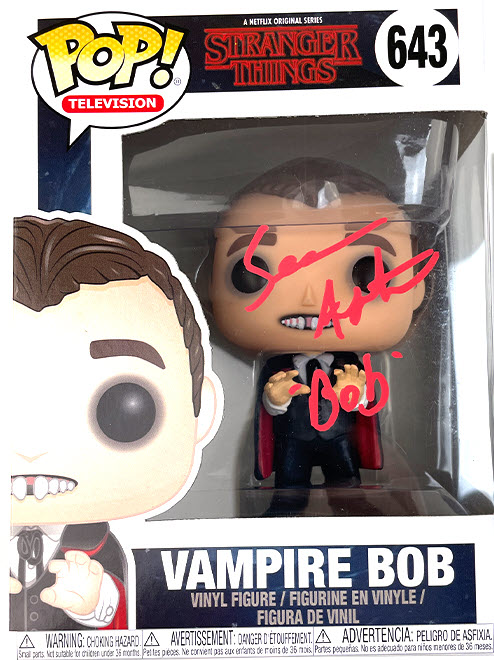
Sean Astin to Keynote RootsTech 2023


The fanboy in me is freaking out a little. I feel like I have know Sean my entire life. He is just barely two weeks older than me, so as I have watched him in movies I have been able to relate to him on several levels. He has played the quiet hero in many ways. Leader of the outcast goonies as they discover themselves and the town's history to go on an adventure and save the town. 


The best sidekick and wingman who cannot bear the ring but can shoulder his friend Frodo's burdens as they venture to save middle earth. 


A long shot football player that beat the odds to get into Notre Dame as a student, barely makes the practice squad on the football team and ends up playing only one series of plays in his football career. A leader and hard worker on and off the field who tried to keep his dreams alive. The only player carried of the field to this day. 


All of Sean's roles from Stranger Things to 50 First Dates have helped me to learn more about myself and the role of friends and family in our lives. 

I do not think that I have been more excited for a speaker at RootsTech. I was thrilled to see Laura Bush exit the Marriott and be whisked away in her convoy of black vehicles. 


The trekker in me was brought to tears by Lavar Burton and his emotional reaction to the family history that was presented to him after his keynote. 
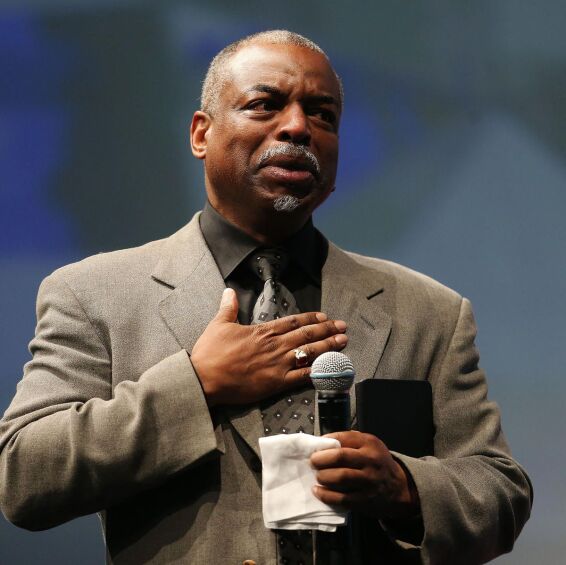

However, I am more excited to see Sean Astin than to be back in person at RootsTech. I feel giddy.


 I know better but I wish my co-workers at RootsTech would get me a signed Funko Pop or something. 


My wife is an influencer at RootsTech, I not so secretly envy her, but if she gets to interview and/or meet Sean Astin I will be so jealous. The ride home that day will me more energized compared to the complete exhaustion we have experienced in years past. 


A more tender memory for me is that Sean Astin the actor reminds me of my boyhood friend and next-door neighbor Murray O'Dell. Their physical attributes and sense of humor are very similar. Murray was always at my side, we were goonies, underdogs, and he was a friend to the end. My teenage years were not easy both from circumstances beyond my control and poor personal choices. I feel like I survived those years more than lived them. As we got older a distance grew between us. We both worked together at our first few jobs. He was always my friend even when I did not treat him like I should have. After high school our paths diverged and I went off to college and Murray joined the Marines and fought in the Persian Gulf. I met my wife and settled in our college town and Murray returned from service and lived in his parents former home and also got married. We kept in touch in those days before social media but not as much as I would have liked or should have. I would tell my children about the adventures that Murray and I had in our youth. I must have talked about him quite a bit because on November 11th, 2005 my mother-in-law was watching the news and heard Murray's name. She called me and I turned on the TV to find that Murray was involved in a semi-truck collision and was killed instantly. I still know Murray's parents home phone number and I quickly called his mother to confirm the story. We cried as we spoke on the phone, she consoled me and loved me like no time had passed. I still morn the loss of my friend Murray. I also morn because I didn't take the chance to fully mend our relationship. I didn't know how much I valued him in my life until it was too late.

I have been thrilled to see Sean Astin in roles after 2003 when Return of the King was released. The movies before that time reminded me of Murray and the person and friend that he was. The movies after that give me a small glimpse of what Murray could have been like. Sean, like me, now has what my kids call a dad bod. His character Bob in Stranger Things was not perfect, a little nerdy, but stood up for those he loved. Bob also remembered the past but did not let that change the way he interacted with people from his past now. As Dr. Julian Echo on Young Rock, he is in the future but holds a grudge against his childhood rival Dwayne as he runs for President of the United States. Murray and I competed in debate with and were in the same high school graduating class as U.S. Senator Mike Lee. They were not rivals but in this age of social media I would have loved to see how Murry would react to current events now.

Thanks for the memories to both Sean and Murry. Welcome to Salt Lake Sean, it will be a pleasure to see you.

21 February 2021

Rootstech Connect 2021

 This week is Rootstech connect, the online version of the world largest family history conference, begins on February 25th. As final preparations are being made the stage has been set for an unprecedented conference.

Early last week during a staff training they released the above numbers for registered attendees for the conference. They also mentioned that there were 20,000 more people than reflected in this graphic. All of the above number are record setting but the fact that 89% of registered attendees have never attended rootstech before is telling.

 
The conference is available in 11 languages but there are also specific classes in 25 additional languages.

Because of the worldwide nature of the conference it begins Thursday February 25th at 4 a.m. Greenwich Mean Time. This means that in Salt Lake City the first Keynote by Nick Vujicic will begin at 9 p.m. MST on February 24th.


I hope you enjoy rootstech this year. If you have questions about rootstech connect please let me know.

03 February 2021

Weighing genealogical proof as facts or truth

I love taking the plastic off my new edition of the National Genealogical Society Quarterly (NGSQ) and diving into the mysteries that unfold in the presented research. I admit that this is not for everyone. I like to learn about strategies that others use to find information or facts about those they are researching. I love the maps, graphs and charts the authors use to help convey information. I also love learning about history and the unique lives that our predecessors have lived. I also think it is intimidating to see the evidence of the reasonably exhaustive searches that genealogists go through to find information that help to paint the picture of facts about the person they are researching.

NGSQ December 2020

The Editor’s Corner for the December 2020[1] publication about Claims and Assertions has caused me to think about the different types of facts we use to prove our theories about our research. At the head of the editorial, they quote Friedrich Nietzche “Facts do not exist, only interpretations[2].”

The editors, Nancy A. Peters and Allen R. Peterson, use examples from an article in the issue to show how a genealogical conclusion was made based on compiled family members’ claims. These claims were later proved false using deeds and probate records that may not have been available to the original researcher. They also explain that the person in question was deliberately obscuring his identity, but evidence proves his true identity.

I know in my own experience that relying on family members’ claims led to a brick wall and not until I broadened my research did I find the ancestor. I also found that my relative had changed his identity and left behind a wife and children, with no sign of divorce. In later records this first wife listed herself as a widow. I can draw conclusions about this ancestor, but I am not sure I still know all of the facts or truth about him.

The NGSQ editorial makes a good point and to a certain extent I agree. However,  I think I disagree with Nietzche and the use of his quote in the editorial. I am not convinced that conclusions and facts are always the same.

Friedrich Nietzsche (1844–1900)

Facts and Truth

Nietche’s quote, “facts do not exist, only interpretations,” is reflected in our current politically charged world. Facts are rooted in truth. I know that many people say that truth is subjective but there are facts and truths that exist. It is sad in modern society I need to delineate between facts and actual facts or truth and actual truth. We are all born is a fact and we all die is a fact. Where we were born or may die may not be known but can be proved. You cannot interpret being born.

It is both the truth and a fact that I was born in Provo, Utah. Not only do I have a certificate of birth and eyewitness accounts but the facts that I lived in Provo, attended schools there, and have relatives who lived and are still living there all collaborate that I was born in Provo.

It is a fact that my children were all born in Ogden, Utah. It is true they were all born in Mckay-Dee Hospital, but it is a fact that they were not all born in the same hospital. Over time McKay-Dee Hospital has been in three different locations along Harrison Boulevard in Ogden. In March of 2002, the newest facility was opened about six blocks south of the previous location. My wife and our three oldest children were all born in the same older building, but our youngest three children were all born in the newer building.

Relativism

Relativism seems like a word that fits well within the world of genealogy and family history.  However, the theory has much less to do with relatives than it does to a belief. The philosophy of relativism holds that each person is free to choose for themselves what is truth or fact, that their point of view or standpoint can alter the way facts or truth are seen or to be believed. This myopic viewpoint lacks intellectual insight and relies more on emotion or feelings than accuracy and verity.

Over the last few years, I have noticed my children picking up a new conversational terminology. I have even caught myself saying it a few times. When I was younger, I would say things like, “I think that the sky is bluer today,” or “I think the snow is deeper this year.” With the new terminology I hear them say, “I feel like the snow is deeper this year,” or “it feels like he was born earlier in the year.” This difference in terminology seems small at first but the underlying emotion of the thought reflects the relativism that is pervasive in our modern culture.

Thinking based on emotion has led to many social issues that blur truth and fact and could affect our field of genealogy. People now feel their gender is different than a biological truth of fact. Others even feel that gender is not real but a construct of thought. Marriage has gone from an institution to a piece of paper. A two-parent household is considered by some as a form of white privilege instead of a societal norm. Even societal norms feel wrong so they must not be true.

I fear the loss of truth and fact if relativism becomes as common in family history and genealogy as it is in politics and morality.


Genealogical Proof Standard

Scholars and professionals in genealogy use proof to draw conclusions[3]. This has been standardized using five conditions. A reasonably exhaustive search, complete citations, analysis and correlation of data, resolution of conflicts, and a written proof summary or conclusion.

Even the most technical and skilled proof summary is more of a probability than truth. The proof can contain facts and truths, but the result is a theory or conclusion. Truth and facts do not change but the theory or proof can. Proof is not truth or fact; proof is a standard of reliability and quality of the conclusion drawn.

Because of the analysis and correlations step of the genealogical proof standard I can see an avenue for relativism to creep into proof. If we project the emotions of relativism of the modern day into the analysis of sources, information and evidence of the past our proof summaries and conclusions will become even less probable and farther from fact or the truth.

This brings us back to the editorial, they expertly discuss genealogical conclusions, proof standards, and examples, however I think the Nietzsche quote that framed the article would have been more truthful or factual if it read, “genealogical conclusions do not exist, only interpretations.” Unless we add an additional standard of proof, may we all hold truth and fact with a higher regard than feelings or emotion.


[1] Nancy A. Peters and Allen R. Peterson, “Editors’ Corner,” in National Genealogical Society Quarterly (Boston, MA), December 2020, Vol. 108, no. 4, p. 243.

[2] NGSQ citing Friedrich Nietzche in Walter Kaufmann, ed. and transl., The Portable Nietzche (1954; reprint, New York: Viking Press, 1988), p. 458.

[3] Mills, Elizabeth Shown, Evidence Explained: Citing Sources from Artifacts to Cyberspace (Baltimore, Maryland: Genealogical Publishing Company, 2017), p. 19.

06 March 2020

Post rootstech questions and answers

I recently accomplished one of my genealogy goals by presenting at rootstech 2020. My wife and I did a presentation together called Discover Your Family with Interviews and Sources. Here is a link to the recording: https://www.rootstech.org/video/discover-your-family-with-interviews-and-sources.

I think the camera adds 150 lbs
My wife and her business partner handed out reference cards during the presentation for people to request information and ask questions. I thought I would share some of the questions and answers I received from a woman named Becky.


Q: How do you go about researching newspapers?
A: I hate to say but it depends. If I cannot find vital records for a person I then look in newspapers. If I have a pretty complete picture of a person and I know where and when they lived then I check the newspapers for additional information. This week I am trying to find information about a Japanese family that immigrated to Ogden, Utah. I can find obituary and wedding information for them but the husband spent time in a Japanese internment camp in Montana during World War II. Some of the Camps had newspapers. I have been trying to find some information about the camps that may help to add to his story.

Q: Do you have a subscription?
A: Yes but you don’t always need one. I have a subscription to newspapers.com. The biggest reason is because my hometown newspaper, The Ogden Standard-Examiner, is digitized and indexed there. There are thousands of free online newspapers. I mentioned the Ancestor Hunt during my presentation. https://www.theancestorhunt.com/newspaper-research-links.html I use this to narrow down my search. The FamilySearch Wiki can also help you locate newspapers for the area you are researching. I did a week long trial subscription to genealogybank but the newspapers there did not seem to provide results I was interested in so I did not continue the subscription.


Q: What Website do you recommend?
A: I assume you mean for newspapers, the two I mentioned above are my go to websites. I believe that Ancestor Hunt breaks down he different collections to location. But you can search free collections of newspapers at

Q: Do you search by location of just a general google search?
A: Yes, I do both. It depends on what I am searching. I think you should have a research question in mind before you start searching. Sometimes a new collection will come online and I will just search in it for my family names but generally I have a specific reason for searching.

26 December 2019

Genealogy New Year’s Resolutions


I found that after I started working for FamilySearch the amount of time I spent on blogging and family history research has dropped. I could write a whole series of blogs on why I think this happened, but the result was a new year’s resolution to share one post a day on social media. For the most part it has not been a burden. It has not garnered as many followers and my blog used to get but the stress surrounding the project is much less.

As I was reviewing past posts from fellow bloggers about Genealogy New Year’s resolutions to decide which might be good to link from GenealogyTrot, I decided it might be time to set some of them for myself.

First, a list of genealogy new year’s resolutions I was able to accomplish over the years.


1.     Find at least one photo of each of my ancestors for five generations.
When I was at Rootstech several years ago I came across the Tapestree booth. At the booth they were selling wire trees with little picture frames on the end of each branch of each tree. I loved how they looked but I was not sure if I had enough pictures of my ancestors to fill the picture frames. I made it my goal to find the pictures I needed to fill the tree.


 I have one at my desk at work and two at my home, one for my ancestors and one for my wife’s ancestors. (They make great gifts and after I have all of the pictures it was easy to duplicate for my parents, in-laws, siblings, etc. I promise I am not being paid for this. It is likely they will never see it).

What I would do differently – I was so excited about gathering the photos I did not do the best job of keeping track of how I got them and how I know they are accurate. I should have documented them a little better.

2.     Share what you have learned with your family.
I think a lots of family historians, especially those who call themselves genealogists, are hesitant to share all of their hard work to others. It was not easy to overcome the “my tree & my family” mentality. However, I have gotten so much more back from sharing I don’t know if I would have had many of the successes I have had in my research. This could also be a post by itself, but I created Facebook groups for each of my families by surname. Whenever I make a discovery, I shared it in the groups. Not only did I get additional details and stories from what I shared I now have other family members sharing their findings in the groups too. This has also led some of the older members of the family to bring me photo albums and other heirlooms because they know I care and will share and preserve the information.

3.     Attend Rootstech.
When I decided to attend Rootstech I felt I had tapped all my known resources and still needed to learn so much more. Saving the money to attend took some planning but the real obstacle in my mind was convincing my wife. As it turns out she attended with me. I don’t want to go as far as to say attending Rootstech changed my life, but I am confident in saying that for both myself and my wife the decision to attend impacted both of our careers. I am not saying this will happen for everyone who goes to Rootstech but I am sure you will learn things that will help to give you direction for your research.

4.     Join A Genealogy Society.
I saw this on many of the other bloggers resolutions lists. I have joined several societies over the years. I also have joined several family organizations. Some are better than others but the adage that “you can learn something from anyone” rings true here too. Some of my favorites are the National Genealogical Society, the Utah Genealogical Association, and the Sons of the Utah Pioneers. Of the many family associations I have joined the Merriam Family Tree and EdmundRice Association stand out in my mind the most.

5.       Learn about my ancestors who trekked to Utah between 1846 and 1869.
This is a specific goal related not only to my heritage but the region of the county where I live. Last summer I participated in a reenactment of the trek with my wife and one of my sons. We each traveled with the name of one of our ancestors who made the trek. In all I found 58 pioneers my son could choose from that were his direct ancestors who traveled to Utah by wagon or foot. I also put together short biographies for each one of them from the many different resources that are available.

I thought I could come up with more than five. I have set many resolutions that I did not accomplish and several I am still working on.

Resolutions I started but have not finished


1.     Earn a genealogical accreditation.
This again could be a whole post. I started the certificate program through BYU-Idaho because I was encouraged by a co-worker and because the price is pretty good. This certificate is not accreditation itself, but the courses are designed to allow you to learn the steps you need for accreditation. I have issues with the program which I may outline at a later point. I have used these as an excuse to take time between semesters or I would be finished.

2.     Interview older relatives.
This was something I started 20 plus years ago. A generation has died since then and I need to interview and document the interviews with the now oldest generation of my families.

3.     Clean up my database.
I have used the same genealogy database since I started researching. For the most part it is pretty good but over the years as I have learned more and added new skills, I have gotten better about entering information and documenting the sources. I was told to start using your skills now and go back later to update information. It is time I need to do that, but the task seems a little daunting. So far I have just updated as I have had opportunity.

4.     Publish my genealogy.
I have a dream to publish one or many different family histories. The task seems so enormous I am not sure where to start. I know the saying that you eat an elephant one bite at a time, but I am not sure where to take that first bite. I need to take my wife’s advise about this but that is also another post.

5.     Knock down the Trotter Brick Wall.
This is not a goal I am sure that I can accomplish. I did successfully break down my Merriam brick wall but the clues for the Trotter line run much colder and in much older veins. I need to put together my conclusions to share them with my family. I am not sure I will ever to be able to accomplish more than that.

Other ideas for genealogical resolutions


17 October 2019

FamilySearch Update - Relationship Viewing

It is exciting to learn about new features about FamilySearch. Today I learned about a new relationships feature that allows you to see how you are related to those who are also working on the Family Tree.

For those of you familiar with the FamilyTree app or those who have attended RootsTech, we have been able to see those who were are related to either in the same room or those also attending RootsTech. We have also been able to see how we are related to people contained in the Family Tree. Now we can see how we are related to those who are working on or in FamilySearch or the Family Tree.


On the opening page feed you can see items that have been attached to your relatives memories. In the case above James Backman (jamesbackman1) has added a newspaper clipping with our common relative.


Clicking on his name pops up a box that included his contact information. Now the pop-up also included a link that says "Enable Relationship Viewing." It is important to note that this new feature is one where you need to opt-in. It is not available by default.


After clicking the Enable link another pop-up box opens so you can enable relationship viewing. Once you opt-in to viewing relationships you are opted in for everyone to see your relationship, it is not a one-to-one option.


After you have enabled viewing then when you click the name it shows a description of your relationship.


You can also click the View My Relationship link in the pop-up and a tree of the relationship will display.


You can access this relationship viewing option from anywhere on FamilySearch where a name is assigned to a fact or memory.


When you click on the name and the pop-up appears and that person has not already opted into Relationship Viewing you will see a link that says Request to View Relationship. When you click this link it sends a request to that person so they can opt-in to view relationships.


If you have already requested that they opt-in but they have not responded the link will say Request Pending.


The feature is also working in memories.

What do you think? Is this something you would want to use?

22 February 2019

New United States quicklink map added to Internet Resources page of Genealogy Trot

13 February 2019

Family Search In-Home activities

FamilySearch has released a new resource for families and individuals to help you discover, gather, and connect your family—past and present.


In-Home Activities are themed activities that help individuals or families to participate in Family History in fun and basic ways. It is easy to feel overwhelmed with getting started or participating in family history. 


There are currently eleven different activities in the About Me section. Each activity is displayed with a name, star ranking from participants, and a short description. 


There are 15 different activities in the My Family section. Like the About Me section, each activity is displayed with a name, star ranking from participants, and a short description. 


Also included is a Tip for Parents page that helps to remind about the purposes of the activities and suggestions on how to make them meaningful and impactful.


The Family Traditions activity in the My Family Section gives ides for three possible activities as well as two ways to enrich or preserve the activity.


The Remembering My Photos activity centers around family photographs and the memories they capture. There are four possible activities along with a way to preserve the pictures and memories online


The My Name activities help to find out more about your own name as well as those family members who may share your name. There are four possible activities and two digital preservation ideas.


At the bottom if the My Name page there is a link to an All About Me activity online.


This Discover Experience currently has 23 different information points that has to do with you and your birthday.


In one I can find out the meaning of my name and of any name of my wife, children, parents, and great-grandparent.


In one I can find out how many people in my country share either my first, middle or last name. It will also look at the names of the five generations of family whose picture are at teh bottom of the page.


There are 289,801 people who share my wife's name in the United States. It is also interesting to note that my father-in-law is from Texas and my mother-in-law is from California. The top two states on the map with the most Rachels.


I almost did not post this one. I feel a little old knowing the first personal computer was invented the year I was born.


One of the modules shows relatives who share a common year with you. In this case my great-grandfather died the same year I was born. The page is filled with information about him including pictures, stories, documents, and audio records if any are available.

I think the In-Home Activities page is a wonderful place to find worthwhile activities that he you to learn about yourself and your family. You should try it out.

11 February 2019

Find a Person on the FamilySearch Family Tree App

FamilySearch has a new feature on the Family Tree app for those who do not have accounts or have not filled in their Family Tree.


When downloading the app be aware that FamilySearch has two different apps.
  1. FamilySearch Tree
  2. FamilySearch Memories
I don't want to discourage you from downloading both but the feature discussed here is in the FamlySearch Family Tree App.


Users without accounts or who are not logged in will see a page to learn about your family. Click the Search for an Ancestor button or swipe to the left.


This page allows you to search for an ancestor without having an account or being logged in.


You will be given information about the family name as well as multiple results to choose from.


  Basic information for your relative will be displayed. If you want more information or functionality you are then asked to log in or create a free account.


Users who already have an account can access this feature by clicking the  more button.


Then select Find a Person.


Enter information about your relative.


You will also receive multiple results and information about the surname you entered.


Once logged in you can see more details about the person and their spouse, and parents. You also can see any sources or memories attached to the person.


If you have not tried the app or if you do not have a free familySearch account you should give this a try.