18 March 2016

There is Room for Everyone in Genealogy - Feb FTT

My Febuary Find, Take, Teach lesson was heavily influenced by my attendance at this years RootsTech, The Superbowl of Storytelling.


I loved to hear Paul Madison tell her story about Finding Samuel Lowe from Harlem to China. It is an unexpected story of a genealogy success. I was also impressed by the gratitude she expressed for those who did the indexing she used to find information about her father. If you have the time it is worth watching.


As I have reflected on RootsTech the one presentation I think about most was by David Isay, a Peabody Award winner who took to the street to capture people's stories. David shares the stories he has recorded on his StoryCorp podcast and has been syndicated on the radio. These recordings are also saved at the library of congress.


The first story he shared was from Lyle Link and Carly Dreher. Carly interviews her grandfather Lyle about his life. It is hard for me to even think about this story without me feeling emotional. It is worth listening to and should not be skipped.


The other story David Isay shared was about Wil Smith and his daughter Olivia. Olivia interviews her father about their life together. It is humorous and touching to hear them talk about their lives together as a single father and daughter.


The stories that David Isay shared along with his own talk brought home to me the importance of authentic stories and they power they have. This is an excellent entry for people to participate in family history.

The video archive from Roots tech can be found at  https://www.rootstech.org/video2/4739804696001

The Family Discovery Day Videos can be found at https://www.lds.org/topics/family-history/familydiscoveryday/2016-video-archive?lang=eng


Family Search has an area in the memories tab were you can upload recordings of interviews you do with your family members. The Memories app allows you to record an interview with someone and add it directly to FamilySearch.

04 March 2016

LDS Ward Family History Class Resources

I received an email from a friend in my stake asking about what resources are available for instructors to teach a Family History class at a ward level during Sunday school. I thought this was a great question so I took a look at what resources I could find. Since his initial email I have been on the look out and have identified several more.


First I pointed him to the The Instructor's Guide to Temple and Family History Work.
This beginning-level course is designed to help Church members understand the doctrines related to temple and family history work, begin to do family history research, and perform temple ordinances for their ancestors. Individuals who are already engaged in temple and family history work can also benefit from the course by learning about additional resources that are available.
The course is divided into seven lessons:

  1. The Purpose of Temple and Family History Work
  2. Getting Started
  3. Gathering Information from Home
  4. Recording Family History Information
  5. Gathering Information from Family
  6. Gathering Information from Public Records
  7. Providing Temple Ordinances 
It is designed to work with a companion piece called Member’s Guide to Temple and Family History Work.


The next source I mentioned was the Introduction to Family History. I took this Religion 261 class from BYU-Idaho. 
Introduction to Family History, is a one-semester course in which you will learn gospel doctrines and principles essential to the work of redeeming the dead and how to find information about your ancestors that is needed to perform saving ordinances for them.
There are twelve lessons in this manual. Each establish and teach the doctrine about why we as members of the LDS church do Family History work.
  1.  The Family Is Central to the Plan of Salvation
  2. The Mission of Elijah
  3. Getting Started with Family History Research
  4. Gathering and Recording Family History Information
  5. Personal Revelation and Family History
  6. Computers and Family History Research
  7. Submitting Names for Temple Ordinances
  8. The Abrahamic Covenant
  9. The Spirit World and the Redemption of the Dead
  10. Covenants, Ordinances, and Temples in the Plan of Salvation
  11. Research in Family History
  12. Finding and Creating Personal and Family Histories

I think that each lesson might have to much information for one Sunday School class but this is a great foundation to teach from in an ongoing class that is not limited in weeks.


Next, I suggest the wealth of information contained in the videos recorded at RootsTech. They have everything from spiritual to inspirational. From basic to advances. RootsTech is for everyone at every level and the videos they share are the same.

The video resources can be found on the RootsTech.org website as well as LDS.org under the Host a Family Discovery Day Video Links.


Next, lds.org has a section under All Callings for Family History Callings. In these resources is a Consultant Webinar Series.  There are seven Webinars topics include:
Each of these resources also include Presentation slides or guides and handouts.

Next, FamilySearch puts out a monthly newsletter for priesthood leaders, consultants, and center directors. There is an archive of these newsletters on lds.org. I get a lot of valuable information from reading these newsletters. Much of what I teach in my Find, Take, Teach class comes from this resource.


Next, FamilySearch has hundreds of resources on the website to teach people how to do their Family History. The Using the Tree section shows basic steps, frequently asked questions, Tips and Tricks, and other resources you can use as a consultant and user of FamilySearch.


The Youth and Family History portal has several resources available. The focus for the youth is:
  • Discovering your Family Story
  • Serving others by Teaching, Indexing, Finding and Taking
  • Experiences youth have had in doing Family History work

There is a wealth of information here aimed at youth but applicable to all of us.

Lastly, there is the FamilySearch Blog. This record is constantly updated with various articles and information about FamilySearch and the world of Family History and Genealogy. This is a leading resource that I use, above the newsletters, to keep up to date on the latest news and stories that have to do with Family History.

This is not an end to the available resources. If you have more ideas or find a new resource please leave a comment below, I would love to learn about it. As I find new resources I will post them here.

03 March 2016

January Find, Take, Teach

January's Find, Take Teach class had quite a few more members. I am hoping the holiday slump is over.

I had a little extra time and I thought I would try and create a PowerPoint presentation for the class. If you are interested you can view it here http://1drv.ms/1L6Jmtq.

First we discussed the To Turn The Hearts booklet that the LDS Church provides to show how leaders can organize, lead, and implement temple and family history work in wards and stakes. Pages 19-21 focus on the roles of Family History Consultants.


We also discussed the upcoming RootsTech conference in Salt Lake.

I then proposed some goals for 2016 for ourselves and those we teach

  • Take some time this year to discover your ancestors and learn something new about them. 
  • Take a few hours this year and try to do one or more of these goals.
    • Add 10 new names to your family tree.
    • Write 5 memories and add them to your memories page.
    • Use the FamilySearch Indexing site, index 5 batches of records.
    • Add 10 new family photographs to your memories page.
    • Attach 10 new document sources to 1 or more individual records.
    • Teach someone else to do the same.
  • You can also set goals of your own. 

We also discussed our task as leaders and Family History Consultants:
Guide each beginner to know what to do next to advance their family history.

-*-*-*-*-*-*-*

I had been asked several questions about how I source and find people in my own family history work. I warned them, and I warn you, I am not an expert but I try and follow the steps I have been taught.

I recently I have been using MyHeritage.com. I received subscription because of my membership in the LDS Church. It is important to know that to get the best use out of this website you need to either enter or upload a gedcom file of your family tree. MyHeritage has a strength in matching records to your tree. I simply created a gedcom in Legacy to upload. It took several hours to go through my file but I currently have 21,540 record matches to investigate.


I love to look through the Newspaper Archive to find records. Not all of them are helpful or about my ancestors but this is much quicker than trying to find records using google or another method.

On of the record hit I got was for the above article on area deaths. I have a brick-wall ancestor that lived near Greensburg so I have been working my collateral lines trying to find other information about the family. I went through the process of copying the transcript from the paper and then matching the names in my database. Everything seemed to jive with the information I already had for the family except for the name Sally West (highlighted above).

I noted that Sally West's maiden name is Facundus and that she lived in Eukipa, California on 24 Oct 1968. I then did a search on FamilySearch for Sall* Facundus. The *, star, or asterisk in a search field means that it replaces any letters after Sall. So it will find a Sally and a Sallie.


I knew the maiden name of Facundus would really narrow the search compared to West. and I was right. The top five results were all for my Sally. The highlighted result is for a marriage record for her son Wallace Warren West.


The 1910 Census record shows Sallie, in her home with her parents and five siblings.


After looking at the actual record I realized that I did have Sallie in my database but her name was spelled incorrectly. I went through each source I found and added them to my database adding sourcing information as I processed each piece of evidence.


I then did another FamilySearch search with Sall* West in California. With this search I found her in the 1940 U.S. Census. living in Long Beach, California.


With the Census information I was able to add another son Lloyd West. I was then able to find may more records for Sally.


In the end, because of an obituary about a sister I found 6 people, along with Sally's birth and death dates, place of burial, and a total of four census records. It was very productive considering how I came across her name.

[I know it has been a while since I have posted. Taking Family History classes at BYU-I has sucked up all of my spare time. I have had a lot of traffic on the website and I have been posting to twitter which shows up on the right hand side of this blog in my RebelMouse Feed.]

16 December 2015

December Find, Take, Teach

My Find, Take, Teach class this month had few attendees. I am hoping the issue was the number of different activities that conflicted with the Class. December is a hard time to try and fit everything in. My youngest son had a band concert at the Junior High School so I even had to bump the start of the class half an hour.

I started out the class with a talk from Elder Dallin H. Oaks called, Family History: “In Wisdom and in Order”. I think that Elder Oaks has some great advise for those of us who are trying to help others to do their Family History work. I suggest that you read it but he gives a great summary in three points.
(1) All things should be done in wisdom and order. We should recognize that our members have many individual circumstances. Considering these, we should promote the mission of the Church in such a way as to accomplish the work of the Lord, not to impose guilt on his children. 
(2) There is a time to every purpose under the heaven. There are many tasks to be performed in temple and family history work. We should encourage our members to make prayerful selection of the things they can do in their individual circumstances and in view of their current Church callings, being “diligent unto the end.” 
(3) Each member should think about... the mission of the Church... as a lifelong personal assignment and privilege. Each should gauge his or her personal participation from time to time according to his or her own circumstances and resources, as guided by the Spirit of the Lord and the direction of priesthood leaders.  [I edited this quote to make it shorter and because of the redefinition of the mission of the church.]
We have to be careful when teaching others not to overwhelm them or make them feel guilty about what they have or haven't done. I try to give answers and information in a way to assist and help.

Family Discovery Center


If you have not have the chance to visit the Family Discovery Center in the Joseph Smith Memorial building on temple square you are missing out. Dennis Brimhall, former Managing Director of FamilySearch, liked to call it a Museum of Me. It is a different approach to getting people engaged in Family History without the usual roadblocks many beginners are challenged with.

It may be difficult to coordinate a visit to Temple Square for a group of people so I thought I would share with you two ways you can bring the Family Discovery Center to you and those you teach.

RootsMapper

RootsMapper is an app that uses the data in FamilySearch to plot on a map the places where your ancestors were born and the migration of your family across the globe.


I have a blog post that goes into a little more detail about the app. This is very similar to one of the booths that you can use at the Family Discovery Center. One advantage to using RootsMapper is that you can customize your search for different generations. You can also search from one of the pinpoints on the map. This would be a fun way to introduce your others to their families.

You will need to have an active FamilySearch account and to have linked yourself to some ancestors for this to work. Members of the L.D.S. Church who have pioneer ancestors will have the best results.

Forebears.io

Forbears.io is a website that specializes in surname and related resources.


I have a blog post with more specific information about the website. Although the presentation of information is not at all like in the Family Discovery Center the general information about a person's surname is similar. This website engages users in learning about their family name through maps and other information. This would also be a fun way to introduce someone to information about their family.

GEDCOM Files
We discussed the use of GEDCOM files in websites and other software. I was surprised that more people did not know about GEDCOM files and how they are used. I made a short blog post about them. I believe this is something we may discuss in the future. I believe this is key to understanding how we can use data as a tool to find for family members for our Family History.

Turning of Our Hearts


The Turning of Our Hearts is a video that shows how a family was brought together by learning about their Family History. It shows how the Ward Council plans and engages the family in the work. I think every ward council should watch this video as part of a training.

15 December 2015

A look at Forebears.io

The Forebears.io website was launched in June of 2012. I remember coming across it a couple of times in my searches and I am sure through other blog posts. I was trying to find a tool that was similar to the one FamilySearch uses in their Family Discovery Centers.


Although similar, it is not the same as what is used in the centers but I thought for my purpose it would show interesting information about surnames. Forebears also links users to other resources of information they may be looking for.


After a quick search of my surname Forebears shows me how common my name is in the world and approximately how many people in the world have my name.


I also appreciate the maps that show places in the world where my name is found the most. You can also change the time period that the map represents.


The maps are also interactive an allow you to drill down for more information. The above map shows where Trotters can be most easily found.


Drilling deeper I can see where in Utah my name is most common.


I also looked in Louisiana where my surname line is at a brick wall. The Parishes in the toe of the boot are where my ancestors once lived.


The Trotter surname is also common in northern England and Southern Scotland.


One of my branches in Louisiana is the surname Facundus. When I look at the map the only place in the United States where there is a cluster of these names in in the same place my ancestors lived. In this way this tool could be very valuable as in research and giving you educated guesses where else you might find information.

RootsMapper a FamilySearch compatible app

I have been using RootsMapper for a while now. I cannot remember when I first came across the app but it has been listed on my internet resources page for at least two years.

If you have never heard of RootsMapper their blog has a description as:
RootsMapper allows you to easily visualize the migration patterns of your ancestors. It utilizes the data that already exists in your FamilySearch Family Tree to plot your ancestors onto an interactive map. Discover your family’s heritage with RootsMapper. It’s easy to get started. Just visit our website and login with your FamilySearch credentials and a basic map will automatically generate. From there you can explore additional options and plot multiple additional generations in seconds.
A lot of people are familiar with what RootsMapper can do if they attended RootsTech last year or if they have been to visit a Family Discovery Center. I am not positive that it is the same technology but the results are pretty close.


RootsMapper works in conjunction with FamilySearch. When you first get to the RootsMapper.com website it prompts you to login with your FamilySearch account.


Once the pages loads your information from FamilySearch you can watch it plot on a map the places where your direct relatives were born. Each pin in the map represents a person. By clicking on the pin you can open a link to their profile page in FamilySearch.

Using the tools in the top left hand corner you can select how many generations you want to have plotted. You can also toggle the lines, pins and country colors on and off.

The tools also show you the number of people in each country. You can also get the same information but generation.

I like the way this tool allows me to visualize the immigration pattern of my family. It also will allow you to see the disbursement of families across the work by generation.

As you can see by my maps, it looks like my first seven generations all lead back to Great Britain and Germany. No wonder I get sunburned so quickly. Try this app. It is interesting to play with the generations. You can also have a seperate relative be the beginning of the map.

What is a GEDCOM file and how do I use it?

I first became familiar with GEDCOM files when PAF support ended and I migrated my data over to Legacy. GEDCOM stands for Genealogical Data Communication. It is a file standard first developed by The Church of Jesus Christ of Latter-day Saints and since adopted and the standard for exchanging data between different genealogy software.

How can you use a GEDCOM? 
One of the great things about using computers to complete Family History work is that the information can be used in many different ways. It is very hard to maintain several different databases. Ancestry.com, Family Tree, WikiTree, rootsweb, MyHeritage, and FindMyPast all allow you to download the information you have in your GEDCOM to their websites so you can use their tools to find out more information about your family.

However, not all of these sites allow you to download information into a GEDCOM file. Interestingly Family Tree currently does not support downloading or exporting information from the website. In order to get this data you would need to use a third-party certified program like Legacy or RootsMagic to convert the information for you into a GEDCOM file.

Why talk about GEDCOM?
I have recently started using MyHeritage.com. When I uploaded my GEDCOM file to the website it searched and found over 12,000 possible record matches for my ancestors.


I am familiar with many of the sources but there are 1282 matches in the Newspaper Archive alone.


After finding a newspaper record MyHeritage also shows you related records for the source you are checking. In the case above there are 10 other related records including pictures, headstones and other records.

Check out using GEDCOM files to find more information about your family members. I suggest that you keep a master file in either Legacy or RootsMagic. Make updates to your master file and then use it to create other GEDCOM files for tools on the Internet.

19 November 2015

My connection to Eugene Waldon Trotter

My mom sent me a message this morning on Facebook that said.
"We heard of a death notice in the Herald today for a 'Eugene Trotter'.  Your dad knows the name but we were wondering if you knew the connection."
So I thought I would take a look. I know that my parents live in Provo, Utah and that they probably read the Death Notice in the Provo Herald. I jumped on to the website and did a search in the obituaries for Trotter. I could not find an Obituary. Realizing that my mom mentioned a death notice I did a general search of the website for Trotter. The first result was Death Notices. I clicked the link and then the Crtl+F keys and searched for Trotter in the text on the page. The very last notice on the page was the one I was looking for. It says that Eugene died 15 Nov 2015 and that services will be held on 21 Nov 15 in Provo, Utah.


With this information I did a search on google for Eugene Waldon Trotter. It looks like the first seven results are for relatives of this Eugene and the eighth result is the death notice for Eugene I had just found.

The first result was for an Elouise Trotter's Obituary.
Elouise Griffin Trotter left this mortal realm to return to the arms of her Beloved Savior on December 23, 2013. Elouise was born June 1, 1927 in Clarkston, Utah to Joseph Donald and Grace (Fisher) Griffin. She later moved to Sugarhouse in Salt Lake City where she graduated from South High School. At the age of 17, she started working for the Army. She later moved to San Francisco where she continued working for the Army as a clerk and statistician in the headquarters of the Sixth Army in the Presidio of San Francisco during World War ll.
She later returned home and subsequently served a mission for The Church of Jesus Christ of Latter-Day Saints in the Texas Louisiana Mission.
There she met and taught the Gospel to her future husband Eugene Waldon Trotter on the campus of Texas A&M. After her mission, they were married August 25, 1952 and the marriage was solemnized in the SLC Temple one year later. She continued to serve the Lord and His church throughout her life while raising six children despite severe health limitations.
She also was active in the PTA, in politics and in community service. She was an excellent seamstress, painter, poet, and calligrapher and enjoyed cooking and gardening. She was also an avid BYU football and basketball fan.
Our mother was a light to all who knew her and she lived her love of the Savior by serving her brothers and sisters, no matter the sacrifice or humility of their circumstance. Our home was always a refuge to those in need and her door was ever open to the lonely and outcast. It can surely be said of her that she loved us unconditionally, never wavering. She was an astonishing example of enduring in her faith despite much pain and suffering.
She is preceded in death by her beloved parents, her brother, Donald Clain Griffin, and her sister, Barbara Ann Griffin.
She is survived by her beloved husband, Eugene Waldon Trotter and her six children: Sheridan (David) Arnall of Jonesborough Tennessee; Nick Trotter of Salt Lake City, Utah; Robin (Richard) Pedersen of Seattle, Washington; Rebecca (Russell) Boshard of Provo, Utah; Claudia (Jeffrey) Loertscher of Salt Lake City, Utah; and Malinda (Mark) Bramwell of Provo, Utah.
She has twenty grandchildren and twelve great grandchildren. She is also survived by her sisters, Leanor (Paul) Densley of Leeds, Utah and Rebecca (Gene) Mann of Farminton, Utah.
Memorial Services will be held at the Oak Hills Hillside Chapel, Saturday December 28th at 11:00 am, 1960 North 1500 East, Provo, UT where a viewing will also be held Friday December 27th from 6:00 pm to 8:00 pm as well as prior to services on Saturday from 9:30 am to 10:30 am. Interment in the Clarkston Cemetery, Clarkston UT.
Funeral Directors: Utah Valley Mortuary. Condolences may be expressed to the family at www.uvfuneral.com.
I have highlighted the Family History information from this Obituary. I believe this is the right person because they are both from Provo and his will name is in the obituary. I will keep cross checking to make sure this is the correct obituary.

Although I began my search or Eugene Waldon Trotter, in two searches I think I have found his wife's birth and death dates as well as the names of his children. I also have Elouise's parent and siblings names.

The second and third records were from ancestry and required working through that site for information. Since I am just doing an internet search I am trying to cover the basic information I can find so I do not use these two results.


The fourth result from my initial google search get me to the Fold3 website and a Eugene Waldon Trotter's birth certificate. When I got my free account to Ancestry.com and stopped payinf for that subscription I registered for a much less expensive Fold3 account. I am not sure if you can view this from their website without a subscription or not. This is one of the big three documents you can try and find for a person. For now I am not positive this is our Eugene Waldon Trotter. This seems to fit with Elouise's obituary because it says she met him while serving her mission in Texas. Eugene also has one older sibling.

The fifth result is an index of the Sterling County, Texas Birth records from 1927. This index includes the birth certificate found from result number four.

The sixth result is for The David and Sheridan Arnall Family website. Sheridan Arnall was born Sheridan Brooke Trotter to the above mentioned Eugene and Elouise Trotter. Sheridan is also one of the daughters mentioned in the above obituary.


The seventh result is the same obituary as the above Elouise Griffin Trotter but from the Daily Herald website.


I then searched FamilySearch for Eugene. I found his name in the Texas Birth Index, 1903-1997. He is listed as the father to Sheridan Brooke Trotter, born 13 Sep 1953 in Brazos, Texas. The mothers name is listed as Floise Griffin, I can see this is a fat fingered Eloise or Elouise. I also found a U.S. WWII Army enlistment record for a Eugene W. Trotter from 20 Jun 1945 in Ft. Sam Houston, Texas. His birth year is listed as 1927. Same birth year and state as as the birth certificate, this information is backed up by the obituary.


This 1930 U.S. Census shows the Marcus Trotter family in Tom Green county, Texas. The baby Eugene is three years old and has one older sibling. His mother's name is Mable. This record supports the birth certificate found earlier.

My response to my mother was,
"I don't think we can prove how he is related to us. His Father's name was Marcus W. Trotter, the W is probably for Waldon. It looks like Eugune was probably born in Sterling City, Texas February 1, 1927.  Eugene's wife's name is Elouise Griffen Trotter and she passed away December 23, 2013. She was a missionary at Texas A&M and taught him the gospel before they were married. Their children are Sheridan, Nick, Robin, Rebecca, Claudia, and Malinda."
I also added the above information to my Legacy database so in the future if I can find more information to tie these Utah Trotters to my Trotters.

12 November 2015

Find, Take, Teach

Tonight I taught my first Find, Take, Teach class for members of my ward and stake. I think it went well, I hope those who attended got something out of it. As part of my employment I made a commitment to teach others the things I am learning.


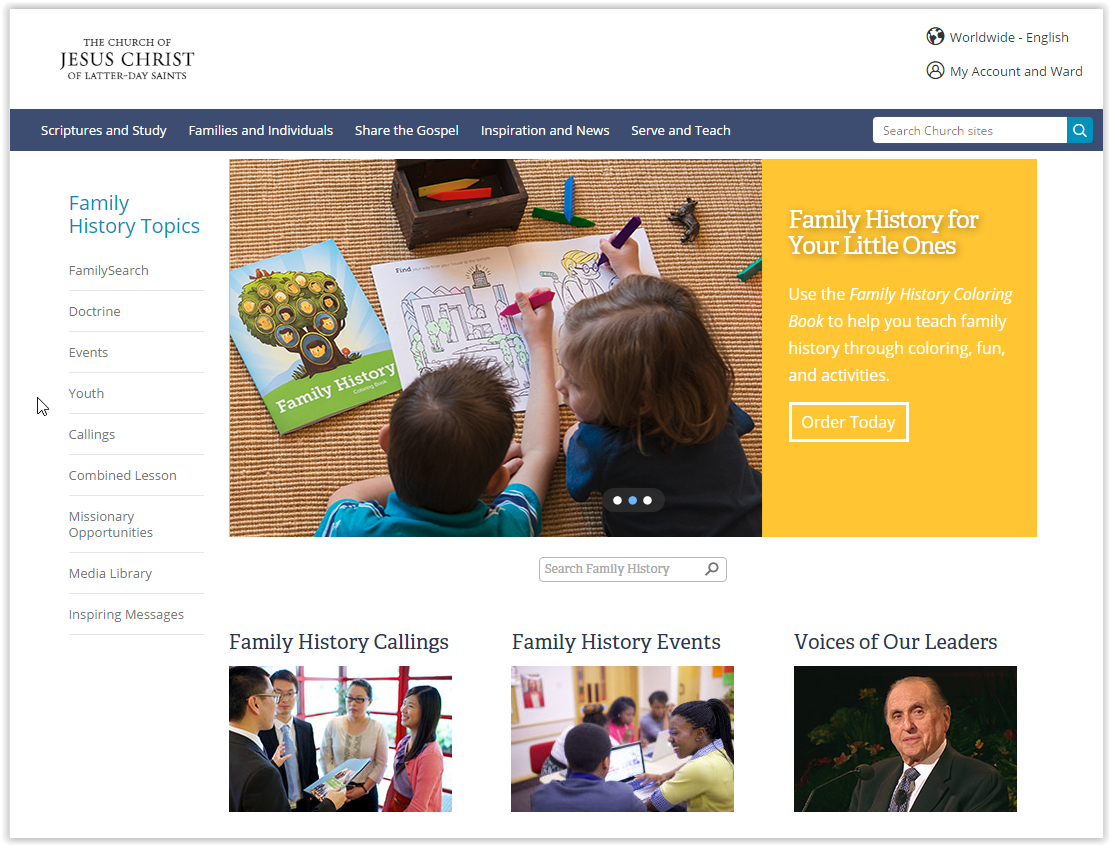
Tonight we talked about the resources available on lds.org. You can access them on the homepage, by clicking the Families and Individuals link in the menu bar and then click the Family History link.


Here you can find resources about FamilySearch, indexing, lessons, and doctrine. Clicking either the Callings link in the left side menu or the Family History Callings from below leads you to resources about fulfilling your callings and responsibilities.

 
Check out the resources from the consultant blog, training for your position, or the consultant webinars.


Next we talked about the App Gallery on FamilySearch. You can access the apps from the link at the bottom of the page as seen in the image above.


I have covered several of these apps (Kinpoint, Hope Chest, and Puzzilla) previously in my blog but I suggest that you try them for yourself. I should have also mentioned the apps that they are working on at BYU: Relative Finder, Grandpa's Pie, and Virtual pedigree.

We talked about other things as well as general questions but if you want the good stuff you need to come to the class.

Here are two takeaway handouts.

05 October 2015

Where did you go to school? 52Q W18

This week we will focus on the question:

Where did you go to school?

Good follow-up questions that go with this question are:
What was school like for you and what are some of your memorable experiences?
What were your favorite subjects in school and why?
What subjects did you like the least and why?
Who were some of your friends in school, what were they like, and what they are doing today?
If you went to college or a vocational school, where did you attend, and what subjects did you study?


It is interesting the information you can learn about a person based on the schools they attended. Last night I worked on an indexing project for schools in Oklahoma. The records I indexed had parents names and home addresses along with children's names, birth dates, ages, race, and gender. Sometimes the history of the school reflects the history of the people who attend the school.


I attended Provost Elementary School from kindergarten through sixth grade. Our mascot was the cougar which was appropriate for Provo, Utah. The school was named after Etienne Provost, a French Canadian explorer and trapper who is argued to be one of the first men of European descent to see the Great Salt Lake. The Provo river and Provo City were named after him. Provost live the end of his life in St. Louis, Missouri. He is considered a contemporary of Jim Bridger and Peter Skene Ogden.


Provost is one of 24 people memorialized on the This is the Place monument in the mouth of Emigration Canyon in Salt Lake City, Utah.

My memories of Provost are foggy. I remember Mr. Penrod who was my kindergarten teacher and eventually became principal. Mr. Shoemaker, my 5th grade teacher, who introduced me to the Apple computer and the 50 yard dash. I believe he also became a principal in the district. I had a relative who worked in the lunchroom. She is related to my grandma, Gloria Taylor Trotter. I cannot remember how they were related but I knew she watched out for me and loved me. We played games at recess like Red Rover and Pomp. I remember being very good at Pomp because I was a very fast runner and not so good at Red-Rover because I was small enough I couldn't break through the girl's arms. During the holidays the librarian would open the library early before school and a bunch of kids would go in and she would play the piano and we would sing Christmas carols. My friends Dick Dyer, Robbie Robertson, Bobbie Boyd, Murray O'Dell and I would sit on our skateboards and ride down the paved driveway in front of the school. The sixth graders were able to play in the band. I learned to play the Alto Saxophone but could not beat Tomika Young to be first chair. I had a crush on Tomika and once gave her my sister's new bear shaped earrings as a present, only to find out that Tomika did not have pierced ears. (Sorry about that Missy.) At the end of school year the sixth graders would tie the maypole and play the teachers in kickball, our class won the kickball game that year. I didn't much care for the maypole dance.


For 7th and 8th grades I attended Farrer Junior High School located on Center Street in Provo, Utah. We love our mountains. You can see Y Mountain and Squaw Peak directly behind the school. Mount Timpanogos is off to the left. Farrer got it's name from a Provo School Board member Bruce Farrer.

Photo taken, Tuesday, April 13, 2010 by PATRICK SMITH for the Daily Herald
In 2005 Farrer became an elementary school and in 2010 they tore down the old building and built a new school on the front field. When the new elementary school opened they changed the name from Farrer to Provo Peaks. I am not sure which is worse, naming a school after a school board member or a water park.

My memories of classes at Farrer are also foggy. I remember that I took two band classes, one for the sax and one for the clarinet. I was proud to be proficient at both instruments. I also remember dissecting a pig in class and I got sick. The mascot was an Eagle. The school had two giant ramps, on the east and west side, to get from the first floor to the second. There was also a staircase by the band room. I remember attending dances at the school. We didn't really dance we just kind of jumped around with our arms in the air to the beat of the song. I wanted to dance with a girl named Debbie Hill but just as I asked Michael Jackson's Thriller came on and she ran off to dance with her friends. I used to work for my lunch so in the mornings Dick Dyer and I would go in and set up the tables, and put the bags in the trash cans. For one year I went to school with my cousin Teri Jensen. She is my uncle Dick's daughter. We also played Buns Up, I was pretty good at that game.

When I was in junior high people would call the house phone and when I would answer they always thought I was my mom. Puberty plays mean tricks sometimes. Once when I was home the secretary from the school called and though I was my mom. It planted the seed of an idea. About a week later I decided I did not want to go to school so I called the secretary to pretend I was my mom to excuse me for the day. It didn't work, the secretary was not fooled and said, "Mat, I need to speak with your mother right now." I hung up the phone. I had a meeting with the principal the next day. I never tried anything like that again. For some reason I also associate my memory of Farrer with the movie Footloose. It was filmed in nearby Lehi, Utah and several students from my school said they were extras in the movie. I tried to cut and style my hair like Kevin Bacon. One time when Murray O'Dell and I were walking home from Farrer we found a bottle of alcohol next to horse pasture.  There was only a little left in the bottle. Murray was so excited to drink it. All I could think was that it was almost all backwash so I didn't try it. A boy cut off his index finger in woodshop, he lost it for good. We couldn't go in there for about a week. The boy had this cup shaped attachment to cover the scar. It was perfect for holding a joystick for video games. I thought he was the luckiest guy alive.


Timpview High School was named after the beautiful view of Mount Timpanogos. The Mascot is the Thunderbird and the sports programs are some of the best in the state. I played in the band for two years before dropping the class to focus on debate. We had a highly successful program until the year after I graduated when they killed the debate all together at the school. I attended most of the dances, learned to drive, and decided to go to college while a student here. I stopped hanging out with my neighborhood friends and started hanging out with Kim Brown, Jim Pier, and any girls that would allow. I dated several girls and burned a couple friends. In the off season for debate we would have a murder mystery and then a court case to determine the killer.  I felt out of the mainstream and rejected by most of the student body. I got suspended for fighting once with a kid we called food. I regret calling him food. I regret the fight. I think sometime when we feel picked on we pick on others to make ourselves feel better. I don't know why. I went to School and debated with Mike Lee, who became a U.S Senator for the State of Utah.

While at Timpview I traveled to Phoenix, San Francisco, Boston, and Berkeley. When I graduated I entertained scholarships from Harvard, Arizona State and Weber State. All of these schools were ranked in the top five nationally for debate with Weber State at the top spot.